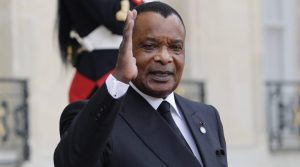
Congo is a dictatorship dressed up as a democracy. Denis Sassou Nguesso has been president since 1997, and before that from 1979 to 1992. His ruling party, the Congolese Party of Labour (PCT) is a relic of the years when he was an ally of the Soviets. A tank stands in front of his presidential palace as a reminder of how he returned to power in 1997. The tank has a sign saying “5 June 1997,” the date the fighting started and the name by which the war is commonly known.
A journalist described the bloody events and fierce fighting of the months that followed:
“Congo’s warring factions hammered each other with artillery in the capital Brazzaville on Wednesday, spurning a ceasefire appeal from African regional leaders… Shelling could be heard all night from across the river in Kinshasa, a day after Congolese President Pascal Lissouba again sent helicopter gunships to pound his foes. The fighting in Congo has claimed an estimated seven thousand lives since it flared in early June.” (AFP 17 September 1997).
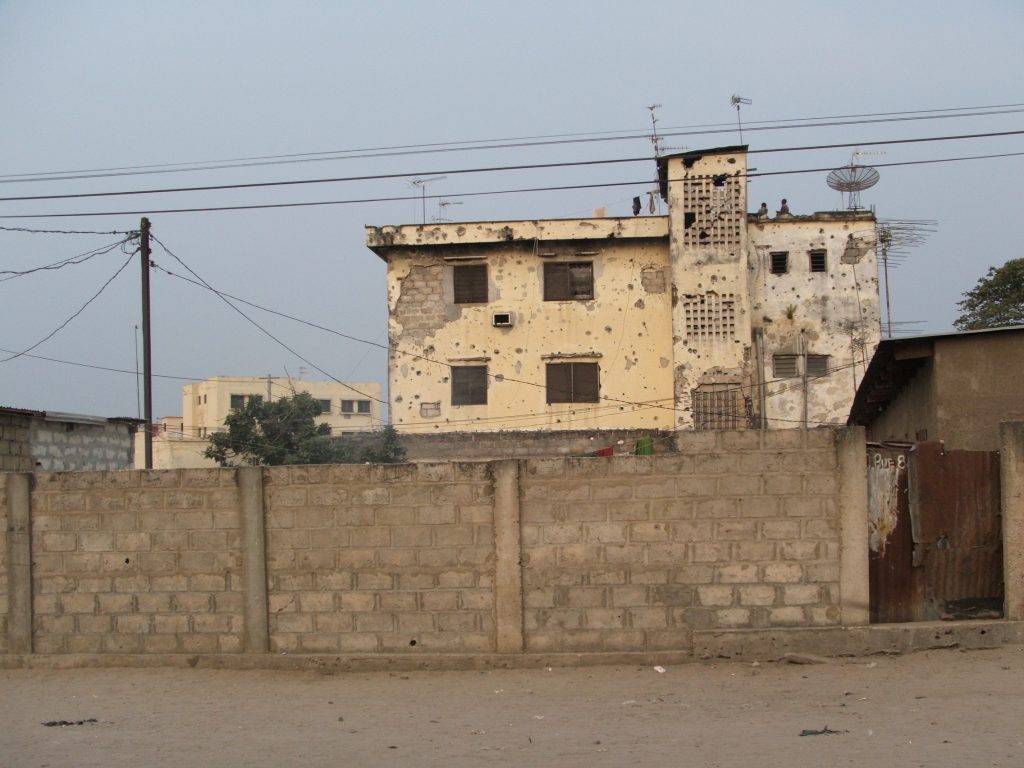
Sassou’s milita, the Cobra, was supported by Angolan and Rwandan militia. France also offered its support, aiming to secure its interests in the country’s oil industry. Sassou won the war and ousted Congo’s first democratically elected president, Pascal Lissouba. The militia were rewarded by being allowed to loot and steal in the opposition neighbourhoods of Brazzaville. Houses were pillaged and civilians were terrorised.
Soon another war started, the 1998-99 war in the Pool. Lissouba’s Cocoye militia and his Prime Minster, Kolelas’, Ninja militia had never admitted defeat. In 1998 they attacked a Hydroelectric Dam, then killed a police commissioner and assassinated a deputy prefect. An attack on a police station triggered a full scale response. A friend, Congolese citizen living in the southern districts of Brazzaville, described the beginning of the war:
“I had gone out to buy rice. I was stocking up on provisions because we were all worried about what would happen next. Already Brazzaville was full of people who had come from Mindouli or other towns that had been attacked by the Ninjas. I walked home, with a boy next to me pushing my two sacks of rice in a wheelbarrow.
“Suddenly we realised Brazzaville was under attack. I dropped to the ground and bullets started whistling over my head. The barrow boy ran off in the other direction and that was the last I saw of my rice. I saw Cobras running helter skelter away from the noise and I asked them ‘What’s going on’ ‘The Ninjas have attacked’ they shouted over their shoulder.
“I took the small back streets. I saw the Ninjas. They were wearing black shorts and were armed with old shot guns, with not many cartridges. When I reached home I found everyone hiding inside. The Ninjas had already advanced as far as the French Ambassador’s residence. There was mass panic. People everywhere were trying to get out. But a Ninja told me they were supported by Savimbi’s Angolans. ‘Stay calm. It will all be over in three days,’ he said.
“We stayed one night in our house, and the next day decided to leave. We had hardly slept, the combat carried on all around us. We crept out and headed for the bridge over the River Djoué. There were nine of us, my wife and daughter, my parents in law and my brothers.
In the afternoon we managed to cross. On our way out of Brazzaville we didn’t see another living thing. But on the other side of the river a couple of other families appeared, carrying their belongings on their heads, like us. Three dead bodies lay on the ground. Near them were the Ninjas, who shouted at us to keep to the right and ordered us to take off our shoes. We had to walk barefoot, this was one of their rules, and walking on tarmac made our feet hurt.”
My friend and his family walked and walked and finally found shelter in a village. There were lots of people like him and very little food. After months he took his family on a dangerous journey across the River Congo and became a refugee in the Democratic Republic of Congo. He returned, to work on the humanitarian crisis that had enfolded as a result of the war, in 1999. I worked with him for years and was always struck by his optimism and commitment to his people. His experience of being under attack by his government and the local militia was not something he could forget. He knew he had no allies and had to create good things out of bad.
The war in the Pool has never really ended. The Pool region is still insecure, held by militia in an uneasy truce with the government. A 2017 peace deal was agreed but little was done to put it into practice. Reports of human rights abuses continue, documented by the International Federation for Human Rights. There are sporadic attacks and repressive reminders from the government that it role is to punish, and not to develop, the Pool.
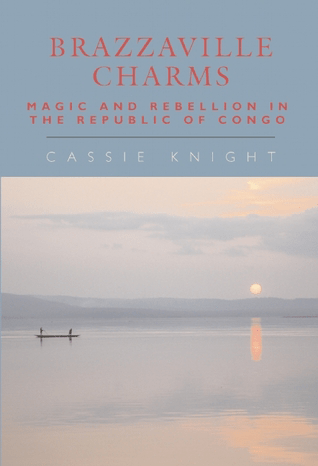
Read more about Congo’s history in Brazzaville Charms (buy here). There are interviews with the brave investigator of the “Beach disappearances” when refugees were taken away never to be seen again; and with the Ninja militia, who were willing to disarm and go back to farming if only the government would support them to do so. Congo’s colonial past is also told, not through the eyes of the explorers but by the king of the Bateke tells in his own words how his predecessor King Makoko signed a treaty with Brazza in 1882 and was betrayed. The close relationship France has with Congo is still one which presents itself as one of development through free trade, while the reality is darker and much less benevolent.
Cassie Dummett, née Knight, is an experienced manager in international development and humanitarian response. She lives in London with her family after many years overseas, in Congo-Brazzaville, Congo-Kinshasa, India and Bangladesh.
Brazzaville Charms gives a rare insight into the history and culture of the Republic of Congo. It is a first-person account of what it was like to live there, backed up by research into its history and politics, and told through interviews with Congolese people whose stories come alive through its pages.