I was interviewed for a podcast in the series History Happens Everywhere about Congo Brazzaville during the period 1995 – 2000, and I spoke about the inspiring people I met during my travels there. The theme of the podcast is courage, at a time when civil wars were ravaging the country.
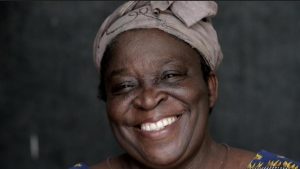
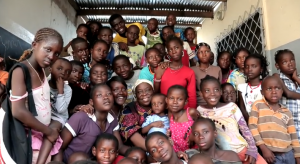
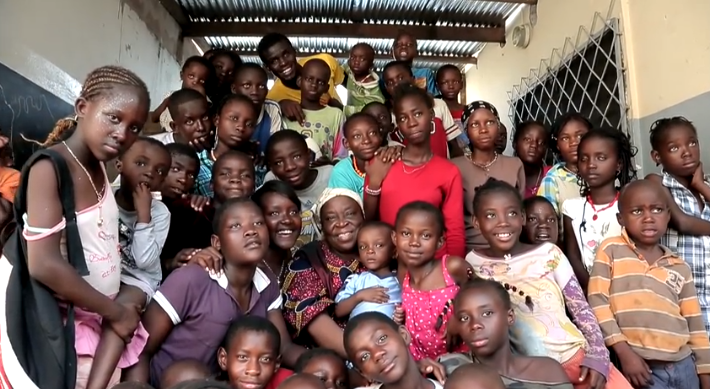
One of the courageous characters picked out in the podcast is Sister Marie-Therèse. When I visited her she was looking after forty children. Her simple house was bursting with life, mischievous faces peaking round doors, children washing under an outdoor tap, small boys playing marbles in the back yard, and bigger boys carrying in wood to start a fire to cook the evening meal. During the civil war, Sister Marie-Therèse and her adopted children found themselves living on the frontline. Warring factions were on either side, firing rockets overhead. Three fell on their compound, but mercifully no-one was hurt. Sister Marie-Therèse remembered walking to fetch water from the well and hearing bullets whistling past. She shared these memories calmly, smiling widely as she concluded, “I must be mad.” Her generosity and courage gave new life to children who had been orphaned and abandoned. She never knew where the next meal was coming from but trusted in God and she loved her children unconditionally. She had deep confidence that she was doing the right thing.
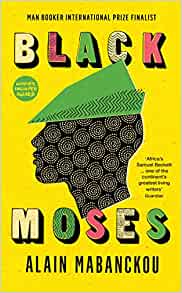 Another orphanage story set in the Republic of Congo is Black Moses (Petit Piment in French) written by Alain Mabanckou in 2015. The book is set in and around the Congolese port city of Pointe Noire, 560 km from Brazzaville, the capital. The protagonist was named Black Moses by a priest who visited his orphanage every Sunday and promised that, “the Angel of the Lord will appear to you too,” just as he appeared to Moses in a flame of fire from the midst of a bush. The priest’s weekly visit brought relief from the violent discipline imposed by the orphanage director. The priest taught them to dance the pygmy dances of the north and “the tunes of the songs … gave us courage to face the week at school”. Black Moses had the courage to stand up to the orphanage bullies, a pair of twins called Songi-Songi and Tala-Tala, by spiking their food with chilli. He gained the nickname Little Pepper as a result.
Little Pepper runs away for the orphanage and survives a precarious life living on the beach in Pointe Noire. Finally, he is adopted by a mother figure, who he calls Maman Fiat 500, and holds down a job in the port, and is even promoted. But it all collapses when Maman Fiat 500 is expelled in the mayor’s drive to clean the city of migrants. Little Pepper descends into madness. He is tormented that he has lost his adverbials, and without them “my verbs will be all alone, they’ll be orphans like me.” In the final chapters he wreaks his revenge on the politician who ruined his life, and ends up back in the very place he where he spent his childhood: the orphanage has been turned into a prison. His story begins and ends with him locked up by an authority that is mad in its thirst for power, classing him as insane, when in fact he can see all too clearly what is going on. He is still able to make friends, and the story ends very much as it began, with the two friends gazing out of the window, hoping for liberation. It is a story of courage, but not really of hope.
A Congolese friend (from neighbouring Congo Kinshasa) was chatting in my garden the other evening, analysing the politics of his home country. He called it the “politics of fear”: where people are afraid to speak out, they are afraid of the future, they are afraid of the repercussions on family and friends if they stand up for what is right. It is a society run on fear. He was talking about DRC but I think it applies to Congo Brazzaville too.
In this climate of fear, everyone needs courage to continue with their daily lives.