Could the current drastic drop in oil price save Congo’s threatened forests? The oil price has plunged to $20 a barrel due to over-supply and COVID19-induced lack of demand. Could this bring a ray of hope to the threatened forests of the Likouala Region in the Republic of Congo?
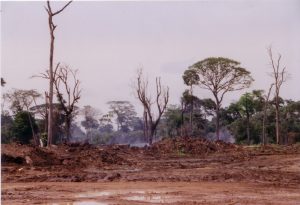
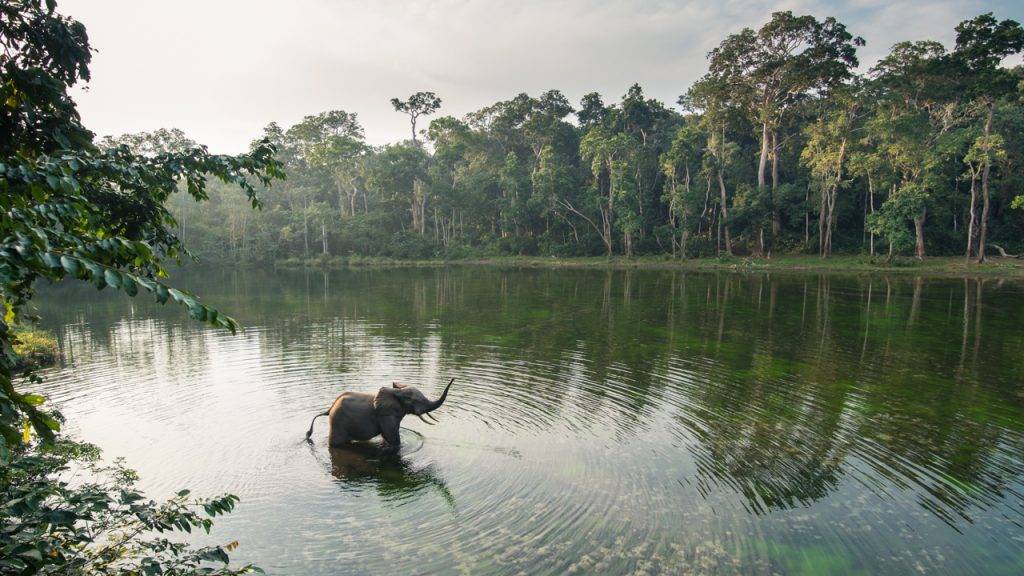
The President, Denis Sassou Nguesso, wants oil companies to explore what he claims are vast oil reserves under the spectacular swamp forest of the Likouala. The forest is home to endangered forest elephants and lowland gorillas. It sits on the world’s largest peat bog, identified only recently in 2014, making it one of the world’s largest stores of carbon. It holds a phenomenal 30 billion tonnes of carbon, equivalent to three years of global emissions. For the animals, insects, birds and plants living there, and for the health of humanity in a warming planet, this forest must not be lost to oil exploitation.
A Global Witness investigation revealed a trail of dubious business associates involved in the oil concession called Ngoki.
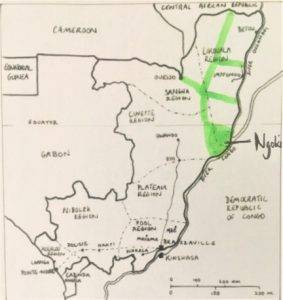 The oil discovery was declared by Petroleum Exploration and Production Africa (PEPA), a Congolese company headed by President Sassou-Nguesso’s nephew, Cyril Nguesso. The head of the board and major shareholder is Willy Etoka, the 10th richest person in francophone Africa, also a close associate of the Sassou family.
Willy Etoka has benefited from their personalised approach to the nation’s oil resources: Etoka’s oil trading company SARPD Oil is the intermediary between Congo’s state oil company and international oil traders and controls 60% of fuel imports. Global Witness reveals that the French bank BNP Paribas pulled out of dealings with Etoka because of corruption risks.
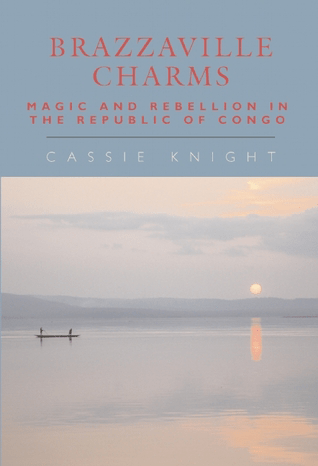
Mr le Floch-Prigent was a consultant on the Ngoki project before Willy Etoka took control. My book, Brazzaville Charms, tells the story of Floch-Prigent’s egregious corruption as head of Elf, for which he was jailed in 2003. Mr le Floch-Prigent told Global Witness Mr Etoka “works with Denis Christel Sassou-Nguesso,” and that, “The work that has been done [at Ngoki] has been overseen by Mr Etoka and therefore by Denis Christel.” It seems that little changes in Congo: Total (formerly Elf) bought the rights to the Mokelembembe block, north of the Ngoki block, which contains over 10,000km2 of peatland rainforest ecosystem. Total said they are aware the concession is “ecologically sensitive”. Total also held a prospecting license for an area called Koli, overlapping the Noubale-Ndoki national park, an outstanding area of lowland forest, which had been kept relatively safe because of its remoteness and lack of proximity to roads.
Total, PEPA and SARPD Oil should end their exploration of Likouala forest concessions. All investors should pull out of this project. Extracting oil from one of the world’s few remaining untouched forests would be devasting. It contravenes every country’s commitment to reduce carbon emissions. It is wrong on every level. I call on Credit Agricole, Barclays, JP Morgan and others to stop their investment in the Ngoki oil concession now. DFID and other donors supporting the Central African Forest Initiative (CAFI) should insist on legal protection for the forest under Congolese law and make this a condition of their US $65 million funding.
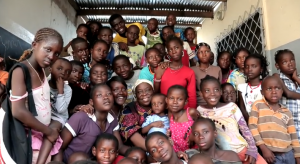
The forest is home to indigenous people, the Bayaka pygmies. Their land tenure rights, set out in international law, are being over-ridden by the government of the Republic of Congo. I write about the pygmies and their history of exploitation, in my book, Brazzaville Charms. Let us hope that oil does not further threaten their land, resources and homes, as well as the rich biodiversity of the forest.
Clearly the government and companies involved are only motivated by money, so perhaps the drop in oil price provides a glimmer of hope that all is not lost.