Oil props up Congo’s economy. Oil makes Congo look, at least on paper, like a relatively wealthy country. With a population of less than six million, Congo’s exports are worth nearly 2,000 USD per citizen. However, in reality the wealth reaches only a small clique of powerful people. It does not go much beyond the presidential family and the rest of the nation remains in absolute poverty, with families scratching a living from small plots of land and selling handmade items in the local market.
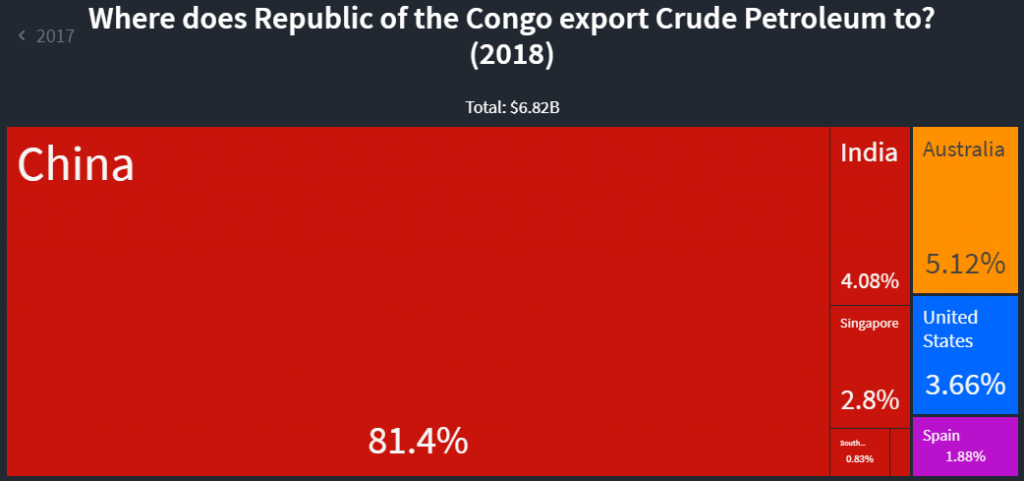
In 2018 80% of Congo’s oil was exported to China. China in return is the biggest investor in Congo. Campaigners have lobbied for transparency in the oil sector, but contracts are kept secret and payments are made through layers of shell companies to hide what is being paid and how much is making it to the treasury.
The state oil company, Société Nationale des Pétroles du Congo (SNPC) has a balance sheet worth about 50% of Congo’s GDP but the country hardly benefits. The treasury received only the equivalent of about two percent of Congo’s total oil and gas production in 2017. Global Witness has investigated the oil sector and found that SNPC has accumulated debts which risk its financial health. In 2018 SNPC owed its licence partners, like Total in Congo, Chevron and Eni Congo, nearly two and a half billion US dollars, when total annual exports were six billion.
For years, Denis-Christel Sassou Nguesso, a son of the Congolese president, was an SPNC company director. It is alleged that he stole over $50 million from the Congolese treasury by setting up a complex structure of opaque corporate entities in multiple countries. His sister Claudia Sassou-Nguesso has also been accused by Global Witness of receiving almost $20 million of apparently stolen state funds and using it to buy a luxury apartment in the Trump Hotel & Tower in New York.
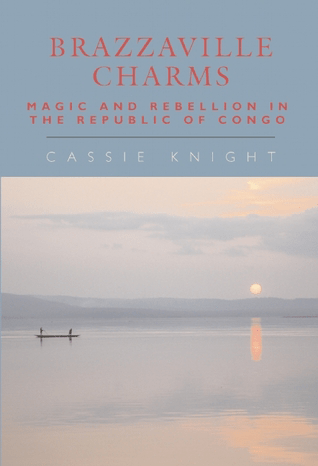
Oil corruption in the Republic of Congo goes back to the formation of Elf Aquitaine by Charles de Gaulle after Congo’s independence. Brazzaville Charms tells the story of how Elf and the French policy of “françafrique.” Elf Aquitaine was not just a normal petrol company, it was a “parallel diplomacy”. Elf Aquitaine became the French government’s centre of influence in Africa. Le Floch- Prigent was Director General of Elf Aquitaine from 1989 but was found guilty and sent to prison in France on multiple counts of corruption. He gave a disarmingly frank interview in which he described the multiple ways in which money was stolen from the Congolese public for the benefit of the French oil company, or channelled into private bank accounts of the Congolese elite. Elf would lend money and agree to be paid back in oil, but at a price set well below the market price. Congo’s debt grew exponentially, and Elf had a guaranteed source of oil which was already paid for at rock-bottom prices. Commissions were paid into shell company accounts and front companies, eventually making their way to French political parties and into Sassou’s family’s offshore bank accounts.
When oil prices collapse, Congo’s economy goes into shock because of the drop in value of the commodity which makes up nearly 70% of its economy. It was the collapse in oil prices which contributed to the end single party rule in 1991, after the fall of the Berlin wall and the end of the Soviet Union. President Lissouba, the first democratically elected president in Congo, antagonised Elf by negotiating new contracts with a rival, Occidental. Then Elf meddled in politics and fed the instability which triggered civil war and brought Sassou back. In the 1997 war, Elf supported Sassou’s return to power by financing his Cobra militia. Le Floch-Prigent explained it with a brutal lack of regret.
“Arms were delivered. People are dead. And every month, when their oil is sold, the Congolese see part of their money going directly to Elf to pay for these arms. This ignominy has been going on for four years, but who cares? … Thousands of Congolese are dead and the survivors must pay for the arms that killed their relatives”
Campaigns such as Publish What You Pay have lobbied for changes to the law. In a sign of progress, Canada, the EU and Norway now require companies to disclose what they pay for oil. But corruption continues. Global Witness’ investigation into SNPC’s revenue reveals that more oil went to unknown destinations than to Congo’s treasury. More must be done to stop the political elite, oil executives and offshore banks from siphoning off a nation’s natural resources. The UK, US and particularly China, Congo’s fastest growing market for oil, need to be pressured to make their oil contracts transparent and to stop paying commissions into offshore bank accounts. In simple words, they must stop propping up dictators.