As the negotiators work to achieve agreements this week, in the final week of COP26, what are the implications for the Republic of Congo?
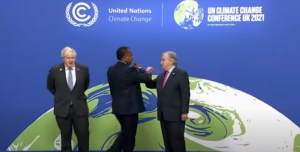
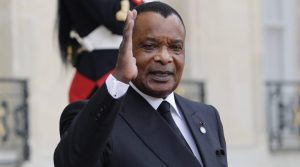
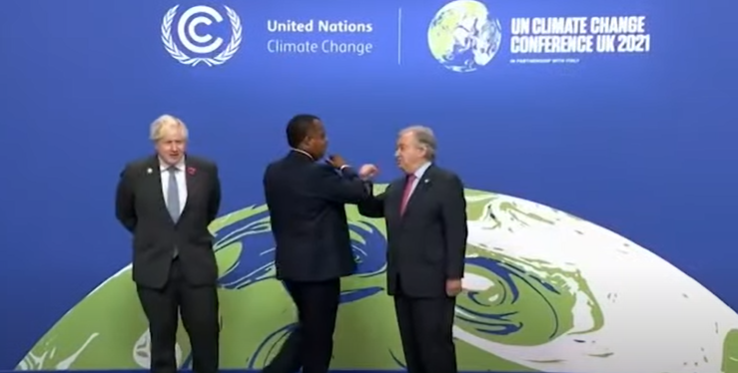
President Sassou Nguesso gave a speech in Glasgow on 2 November 2021 about Congo’s “immense stretch of forest” which is the leading net captor of carbon on the planet. The Cuvette Centrale stores 31 billion tonnes of carbon, three times global annual emissions, he said. President Sassou Nguesso called for more financing for forests.
The same day, the leaders of 110 countries signed the COP26 Glasgow Leaders Declaration on Forests and Land Use. This excellent declaration is a commitment to collectively halt and reverse forest loss and land degradation by 2030. The six points of the declaration give an indication of all that will be required to do this: revised trade policies, sustainable commodity production, recognition of indigenous land rights, redesigned agricultural policies, new programmes for sustainable agriculture and food security, and, last but not least, financial flows that support ending deforestation. A lot needs to be done. And all of this needs to be done if the pledge is going to be achieved.
Financial flows are of course at the heart of the problem. The peatland forests of Cuvette Central have a dollar sign attached to them. In political circles they are a viewed primarily as a source of income, either through oil and timber exploitation, or, alternatively, through payments for carbon storage (a cynic might say both 1). Rich countries and corporations can buy carbon credits as part of their carbon accounting to meet their Nationally Defined Contributions. The forests of the Congo Basin have huge offsetting potential.
At COP26 forests have taken centre stage. President Sassou Nguesso called for funding, and funds have been promised:
- $12 billion for forest nations to “incentivise results and support action” and “deliver on this ambition and to help them tackle the systemic drivers of forest loss”
- $1.5 billion to protect forests, peatlands and other critical carbon stores in the Congo Basin, with the UK contributing £200 million alongside 11 other donors.
- $1 billion mobilized by the LEAF Coalition for states and countries able to demonstrate reduced emissions.
- $1.7 billion directly for Indigenous Peoples and local communities’ land tenure and forest protection.
- 30 financial institutions – worth $8.7 trillion – pledged to eliminate investment in activities linked to deforestation.
Exciting times for forest protection. But for countries with a poor track record in passing on the benefits of global financial flows to the people who need it, there are challenges ahead.
How likely is it that the money for conserving the forests will disappear overseas into presidential property and the forests remain at the mercy of loggers and oil companies?
Goodwill can only go so far. Companies have committed to clean up their supply chains before. Countries that achieved reduced deforestation – like Brazil until 2012 – have increased it again because the lure of big money is too great. Serious regulation is required to ban trade in all products that come from deforestation, including tropical timber and the commodities grown on deforested land for food, feed and fuel. And financial institutions cannot be allowed to self-regulate their commitment to end investment in deforestation, they must be closely regulated.
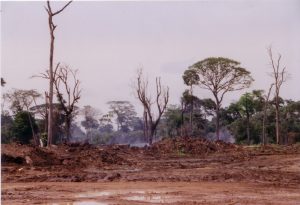
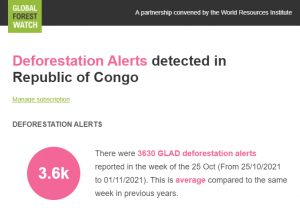
I receive weekly updates on deforestation in the Republic of Congo. In the week preceding the COP there were 2,844 deforestation alerts from the Congo. The Global Forest Watch map – usually showing green for forest – is sprinkled with pink for deforestation.
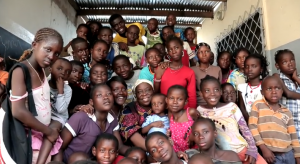
In Congo, people rely on the forests. Farmers expand their fields into the forest, pygmies live and hunt in the forest, artisanal loggers cut down timber, not to mention the people employed by the big logging companies. If the deforestation is going to stop, the people who live in and from the forest, need to benefit from the big money being promised at COP26.
1See Sarah Milne’s brilliant analysis of how logging in Cambodia used and abused conservation funding and laws (2015) https://doi.org/10.1080/14672715.2015.1041275